
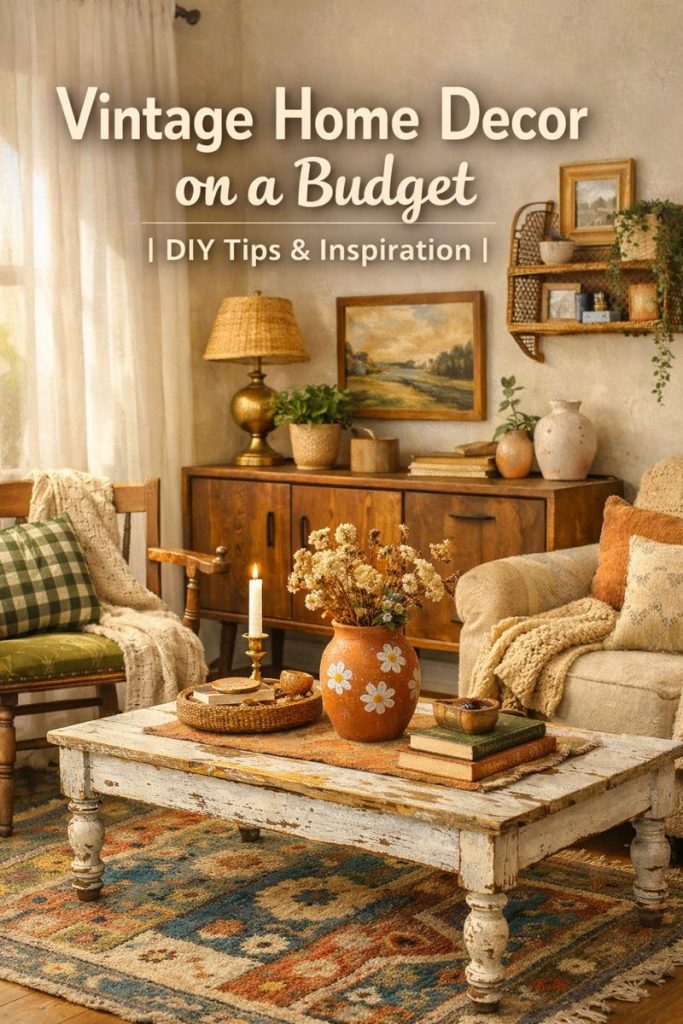
Vintage home decor offers a timeless aesthetic for transforming modern living spaces. It features classic furniture, aged wooden cabinets, antique mirrors, and retro textiles that bring character, warmth, and history to any room.
Incorporating mid-century modern chairs, Art Deco lighting, or Victorian-era accents creates visually rich interiors that blend craftsmanship with contemporary functionality.
Curating vintage pieces emphasizes sustainability and storytelling, turning decades-old tables, armoires, and decorative objects into statement elements that reflect personal taste and design ingenuity.
Collectors and interior designers alike use vintage home decor to craft spaces that are both eco-conscious and evocative, bridging the past with present-day style.
Why Vintage is Dominating Modern Interiors
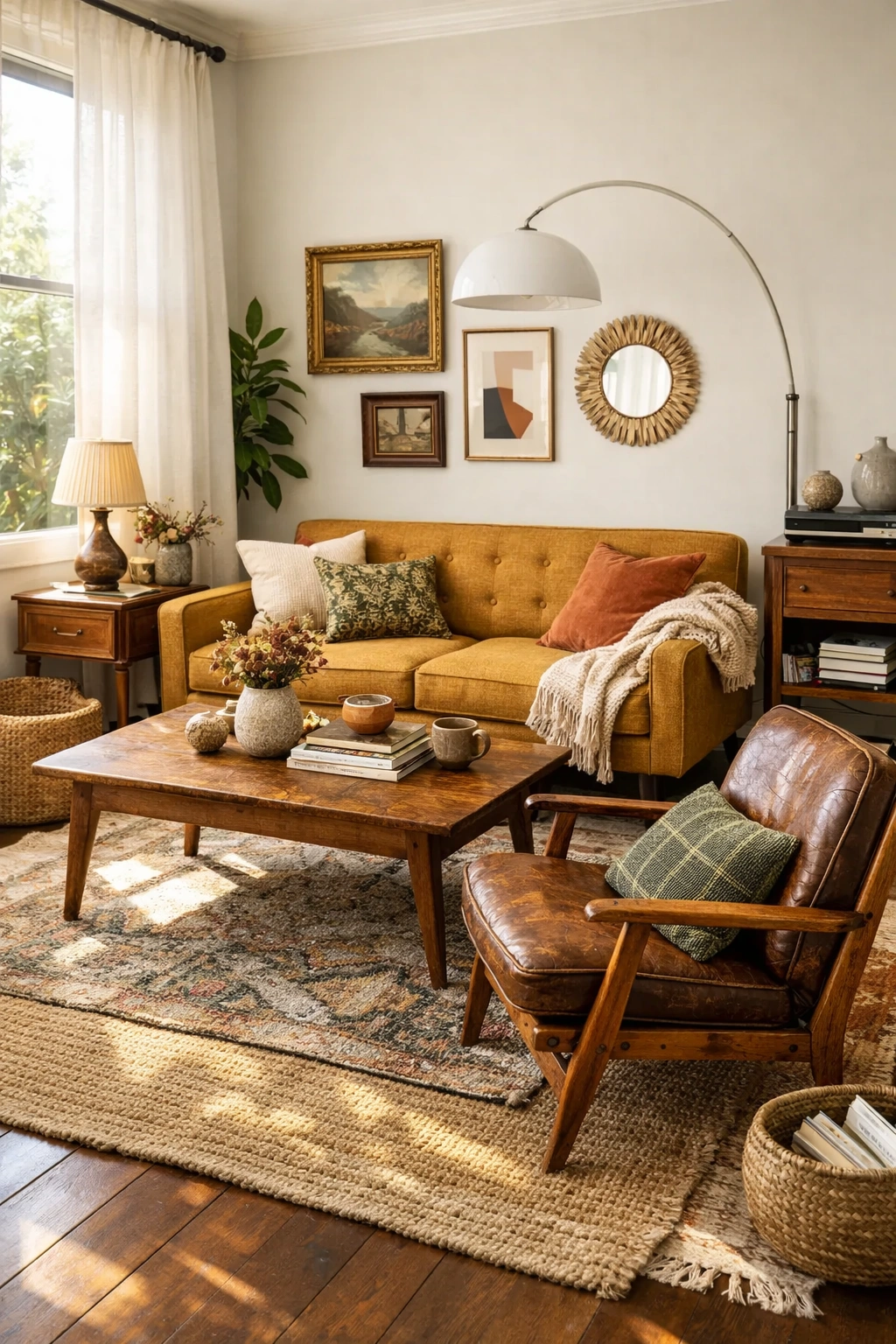
The resurgence of vintage home decor is driven by more than just nostalgia. We are living in a digital-heavy world, and there is a visceral craving for tactile, “real” materials.
-
Sustainability: Buying vintage is the ultimate form of recycling. By opting for pre-loved pieces, you reduce the demand for new manufacturing and keep high-quality materials out of landfills.
-
Unmatched Quality: Most furniture made 50 to 80 years ago was built to last several lifetimes. Solid hardwoods, dovetail joints, and hand-forged metals are hallmarks of an era where planned obsolescence didn’t exist.
-
Individualism: No one wants a home that looks like a carbon copy of a showroom catalog. Vintage home decor ensures your home has a “soul” and a personality that cannot be replicated.
Defining the Eras: Which “Vintage” Are You?
One of the biggest mistakes beginners make is thinking “vintage” is a single style. In reality, vintage home decor spans several distinct design movements. Understanding these helps you create a cohesive look rather than a chaotic one.
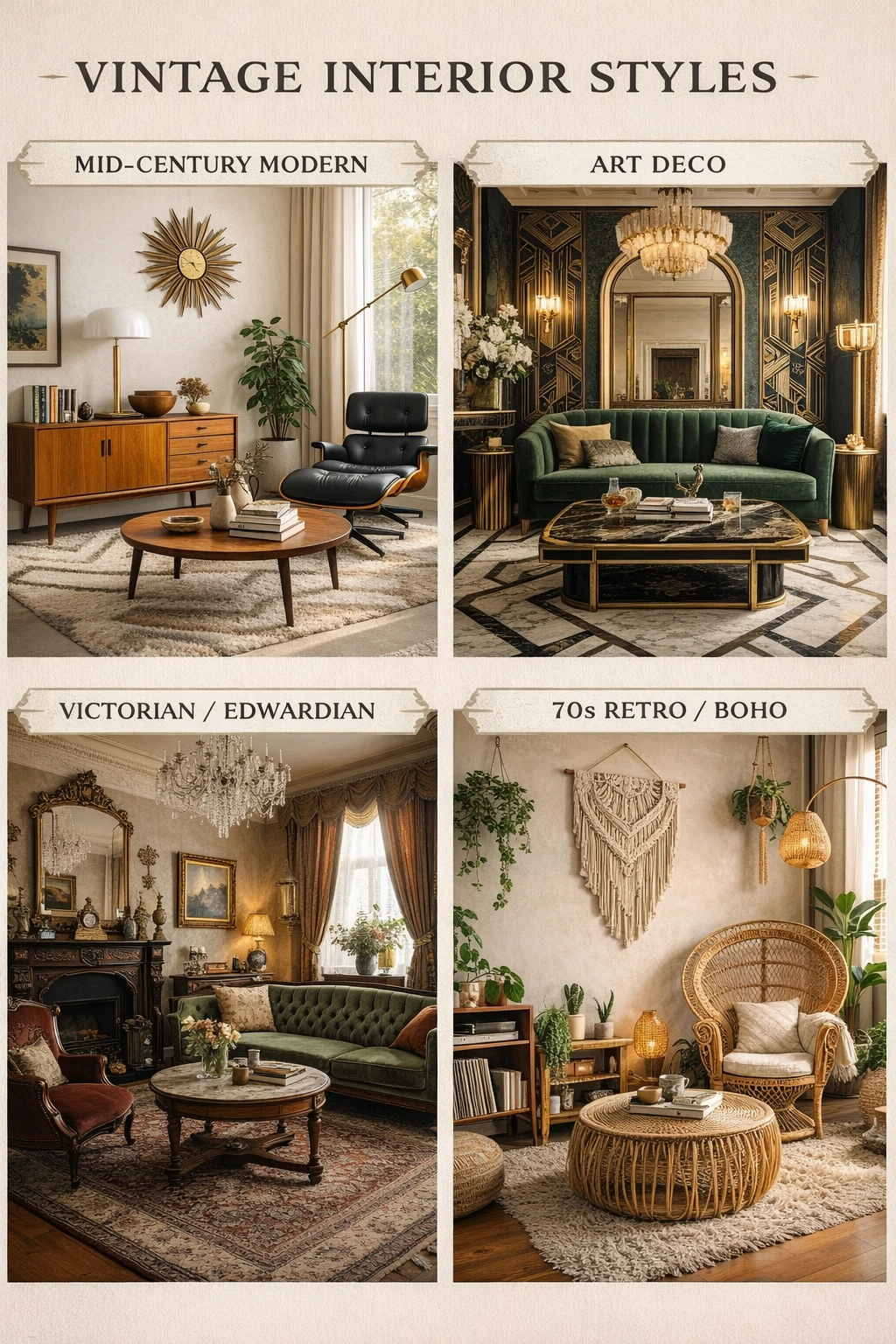
Mid-Century Modern (1940s–1960s)
Characterized by clean lines, organic curves, and a focus on functionality. Think teak sideboards, Eames-style chairs, and tapered “peg” legs.
This era is perhaps the most popular entry point for those starting their journey with vintage home decor because it blends seamlessly with modern minimalist architecture.
Art Deco (1920s – 1930s)
If you love glamour, Art Deco is your lane. It’s defined by geometric patterns, bold colors (like emerald green and gold), and opulent materials like marble, lacquer, and chrome. An Art Deco mirror or bar cart can act as a stunning focal point in a neutral room.
The Victorian and Edwardian Eras (Late 1800s–Early 1900s)
This is for the maximalists. Intricate wood carvings, velvet upholstery, and ornate gold frames. While it can feel heavy, sprinkling Victorian vintage home decor, like a dark wood vanity or an oil painting, adds a sense of history and gravity to a space.
70s Retro and Boho
The 70s are back in a big way. Rattan furniture, macramé wall hangings, and “earthy” palettes of mustard yellow and burnt orange define this vibe. It’s relaxed, tactile, and incredibly cozy.
The 80/20 Rule: Balancing Old and New
A common fear is that using too much vintage home decor will make a house look like a museum or, worse, an attic. The secret to a sophisticated home lies in the “80/20 Rule.”
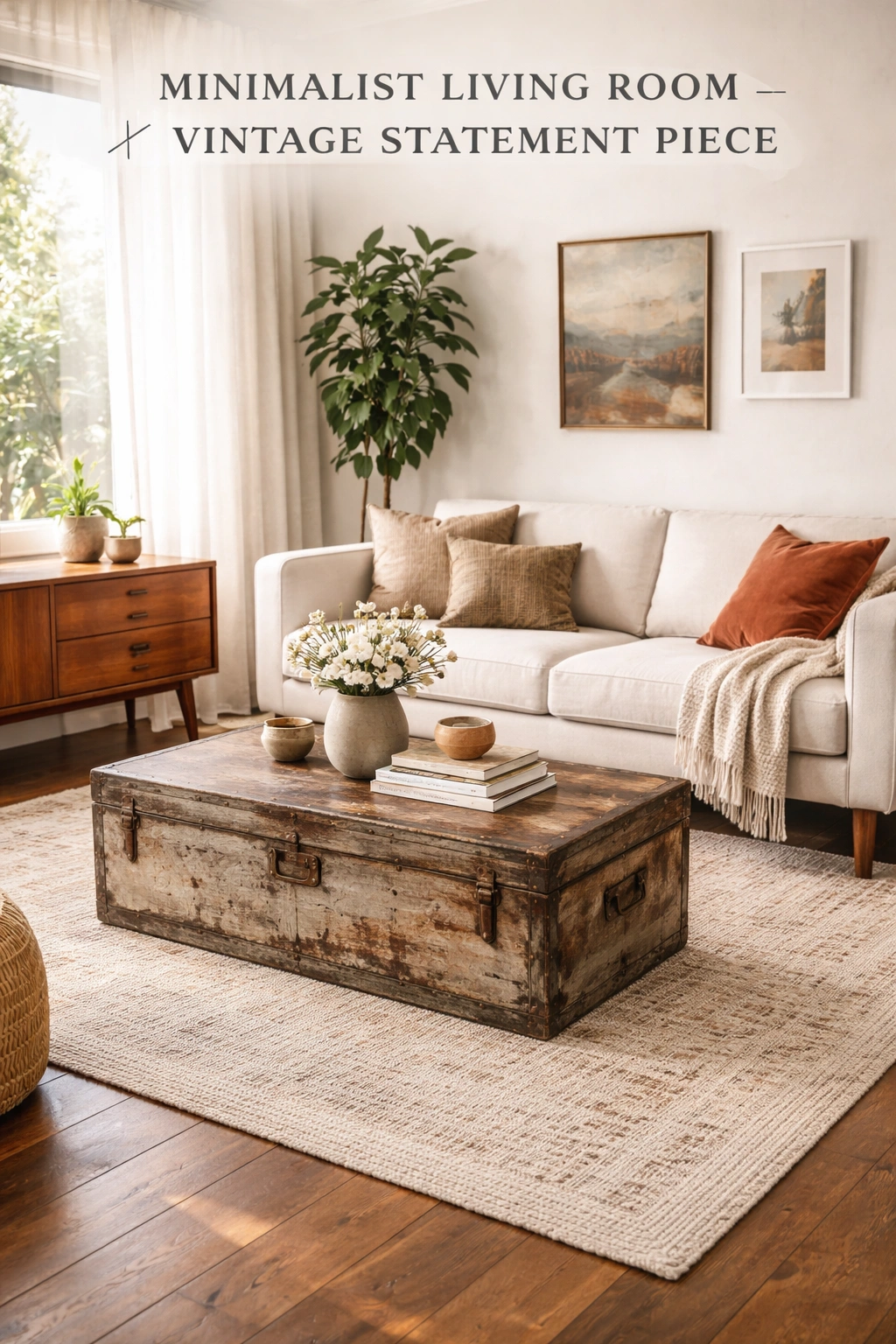
Designers often suggest that 80% of a room should be contemporary (clean lines, modern comfort, updated lighting) while 20% should be vintage. This contrast is what creates visual tension. A sleek, modern Italian sofa looks infinitely more interesting when paired with a weathered, 19th-century trunk used as a coffee table.
By utilizing vintage home decor as an accent, you highlight the history of the piece rather than burying it in a sea of other old items.
Room-by-Room Guide to Styling Vintage
1. The Living Room: The Conversation Starter
The living room is where your curation skills truly shine. Instead of a standard gallery wall of modern prints, consider a “collected” wall. Mix oil portraits from the 1940s with modern abstract sketches.
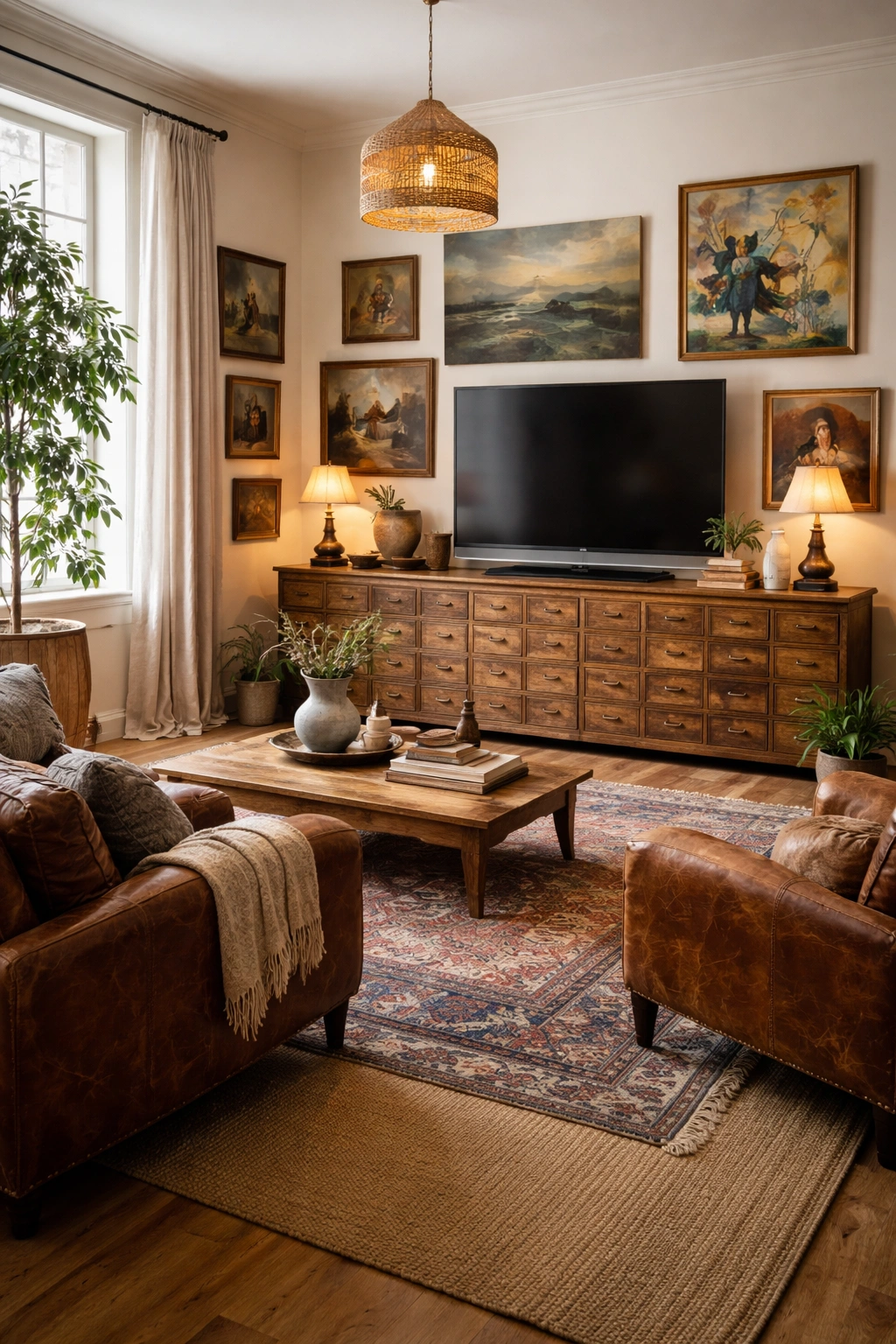
A large-scale piece of vintage home decor, such as a massive apothecary cabinet or a mid-century media console, can anchor the entire room. Don’t be afraid of “patina”, the scratches on a leather club chair or the wear on a Persian rug tell a story of a life well-lived.
2. The Kitchen: Functional History
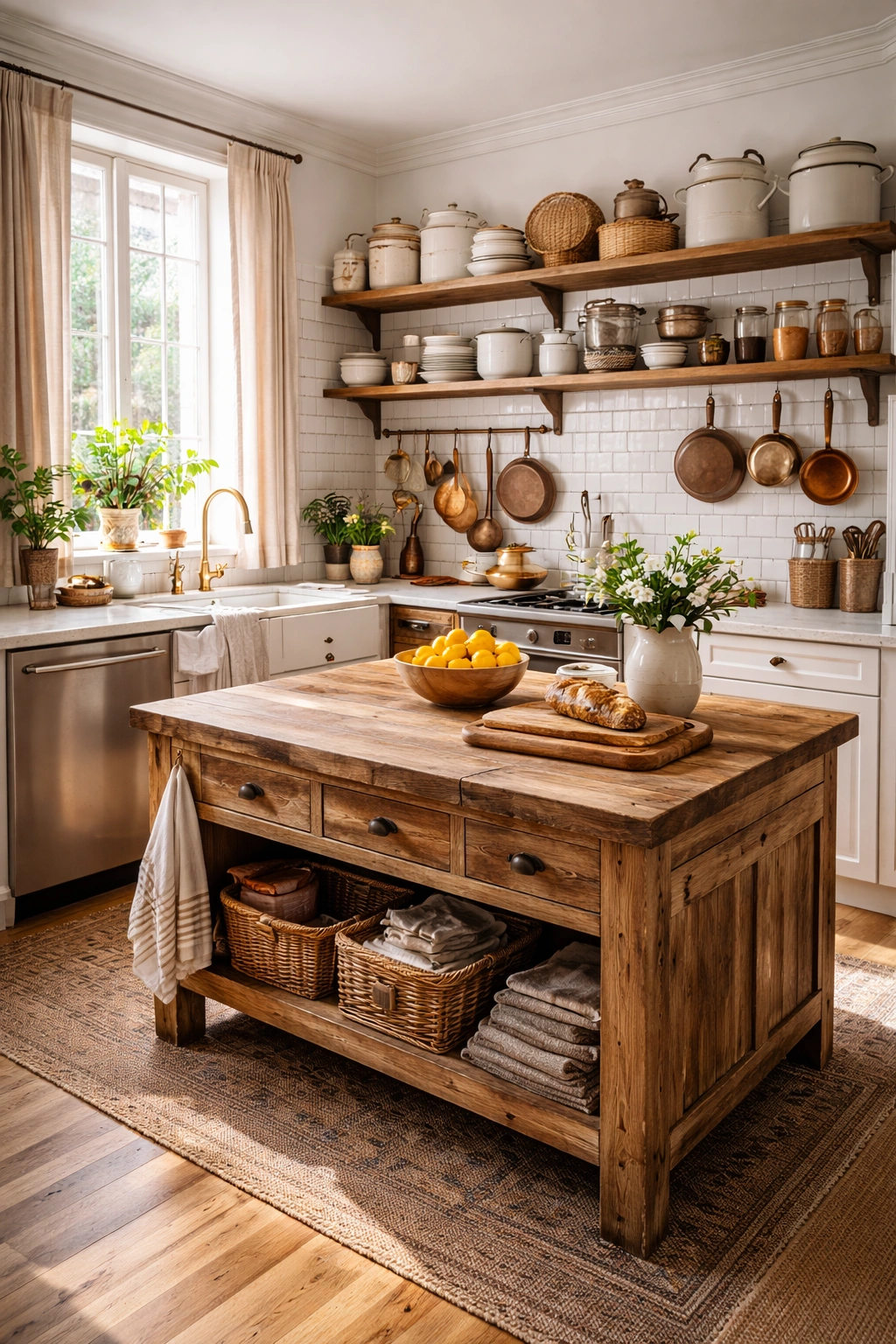
Kitchens can often feel cold and clinical. You can soften these hard surfaces by introducing vintage home decor that serves a purpose.
-
Enamelware: Old bread bins or canisters add a farmhouse charm.
-
Open Shelving: Use vintage copper pots or jadeite glassware as functional art.
-
The Kitchen Island: Many designers are now using old carpenter’s benches or butcher blocks as islands, providing a rugged texture that contrasts beautifully with modern quartz or marble countertops.
3. The Bedroom: A Sanctuary of Softness
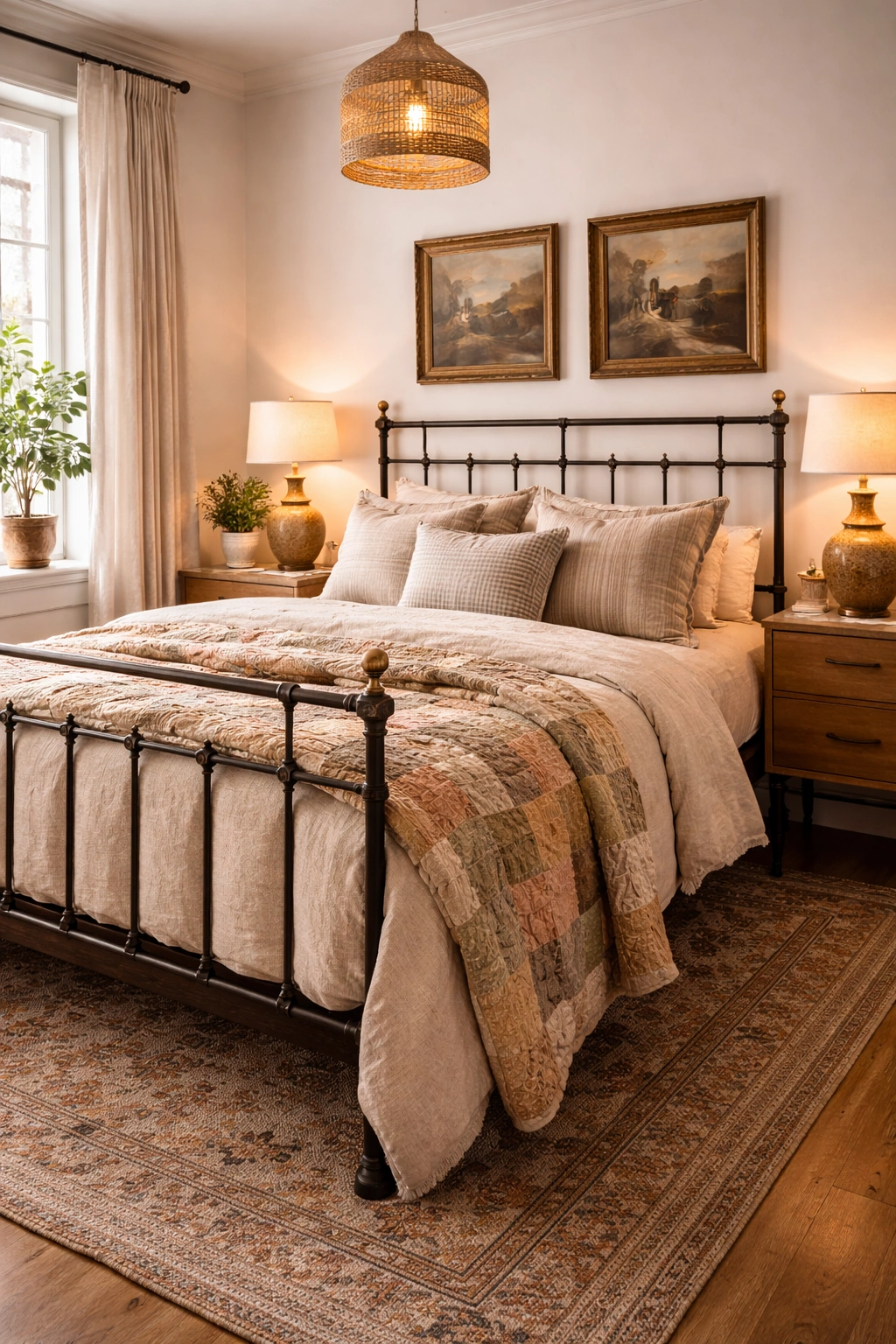
In the bedroom, vintage home decor should focus on comfort and heritage. An antique iron bed frame or a refinished dresser can provide a sense of permanence. Textiles play a huge role here, think vintage linen pillowcases or a hand-quilted throw.
Lighting is another easy win for the bedroom. A pair of 1960s ceramic lamps on modern nightstands creates a high-end, curated look that feels personalized and calm.
4. The Bathroom: Brass and Glass
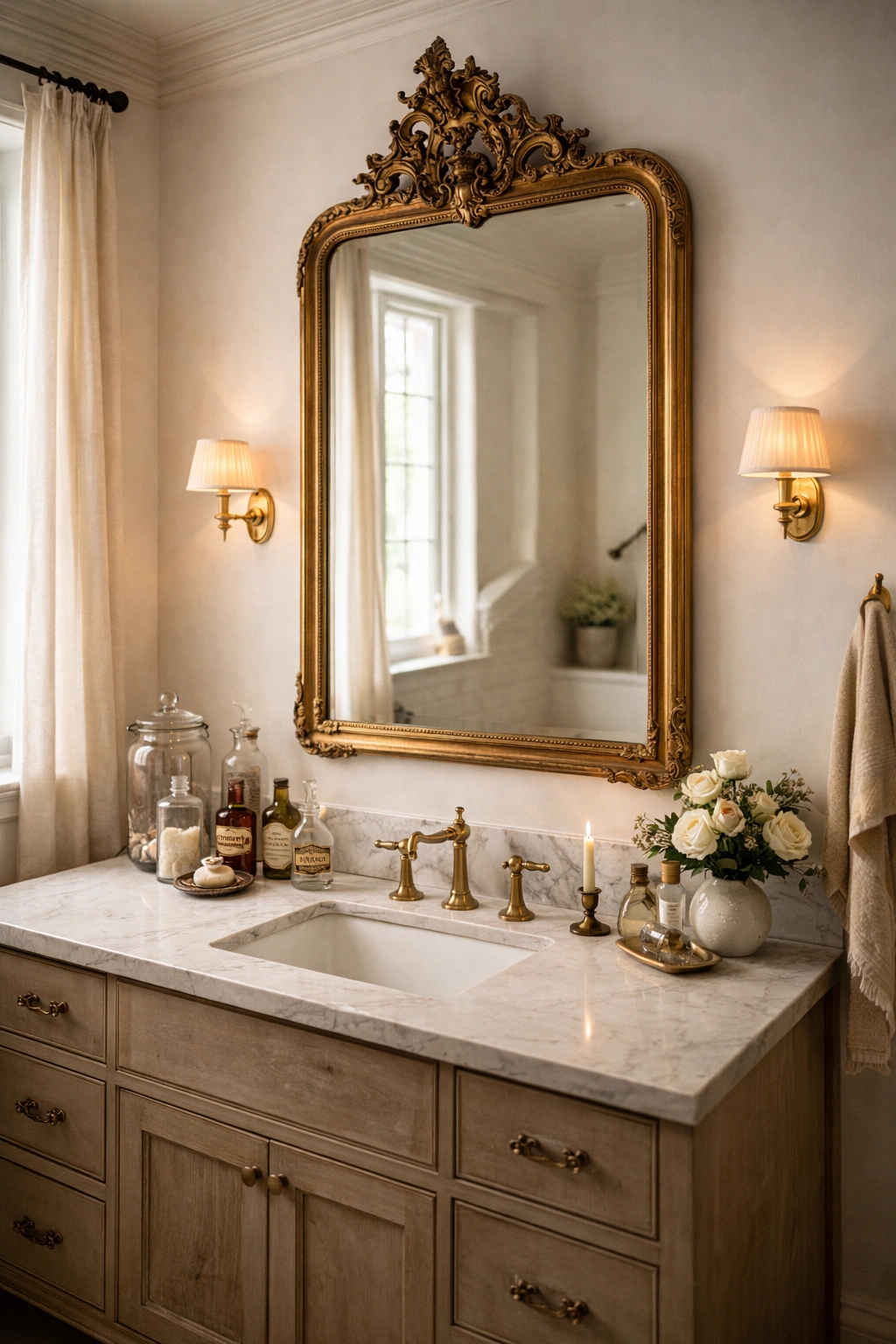
Bathrooms are often overlooked in the vintage conversation, but they offer incredible potential. Replacing a standard “builder-grade” mirror with a heavy, gilt-framed vintage mirror instantly elevates the space.
You can also use vintage glass jars for cotton balls or apothecary bottles for soaps, turning everyday rituals into an aesthetic experience.
The Art of Sourcing: Where to Find the Best Pieces
Finding high-quality vintage home decor requires a mix of patience and a “good eye.” You have to look past the dust and see the “bones” of an object.
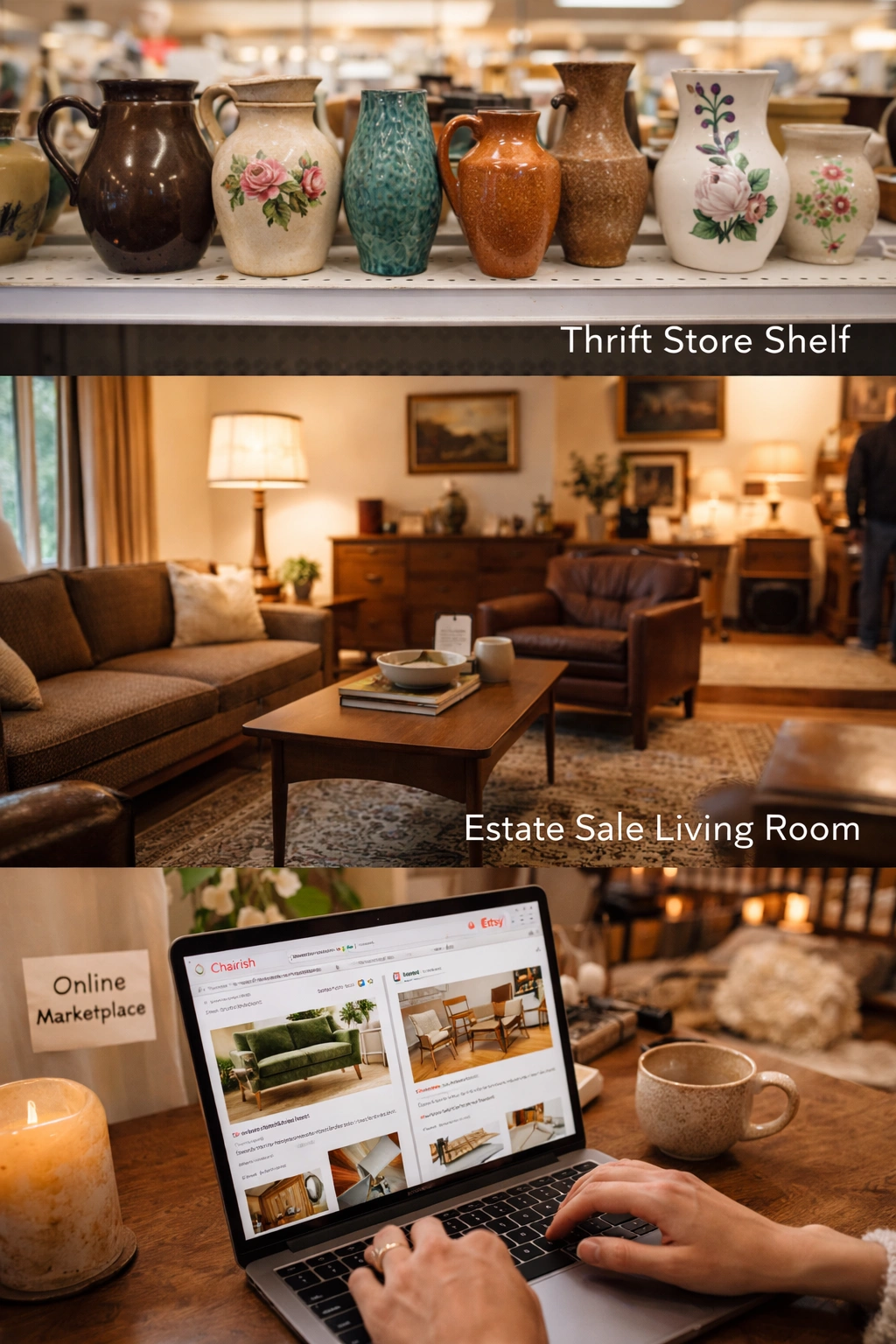
Thrift Stores and Charity Shops
The “low-hanging fruit” of the vintage world. These are best for small decor items, vases, brass candlesticks, and picture frames. Furniture is harder to find here but can be a goldmine if you’re willing to do some light restoration.
Estate Sales
Estate sales are the “holy grail” for serious collectors of vintage home decor. Because you are often buying from a single household that has been lived in for decades, you can find complete sets of mid-century dinnerware or pristine, high-end furniture that has never moved from its original spot.
Online Marketplaces (Etsy, eBay, and Chairish)
If you are looking for something specific, like a “1950s atomic clock”, online is your best bet.
-
Etsy is fantastic for curated, smaller items.
-
Chairish and 1stDibs are for high-end, authenticated designer pieces.
-
Facebook Marketplace is the modern-day garage sale; it requires constant refreshing but offers the best local deals.
Identifying Quality: A Guide for the Non-Expert
How do you know if a piece of vintage home decor is worth the investment or if it’s just “old junk”?
-
Check the Material: Avoid particle board or “veneer” that is peeling away from a plastic base. Look for solid wood. If a piece is heavy, that’s usually a good sign.
-
Examine the Joinery: Open the drawers. Do you see “dovetail” joints (interlocking wedge shapes)? This is a hallmark of quality craftsmanship. If the drawers are just stapled or glued together, it’s a lower-end mass-produced piece.
-
Look for Makers’ Marks: Check the back of dressers, the undersides of chairs, or the bottom of ceramics. A stamp like “Made in Denmark” or a specific designer’s signature can triple the value of your vintage home decor find.
-
Smell Test: It sounds strange, but smell the wood. A musty smell can usually be aired out, but the smell of mold or heavy smoke can be nearly impossible to remove from porous materials.
Caring for Your Vintage Treasures
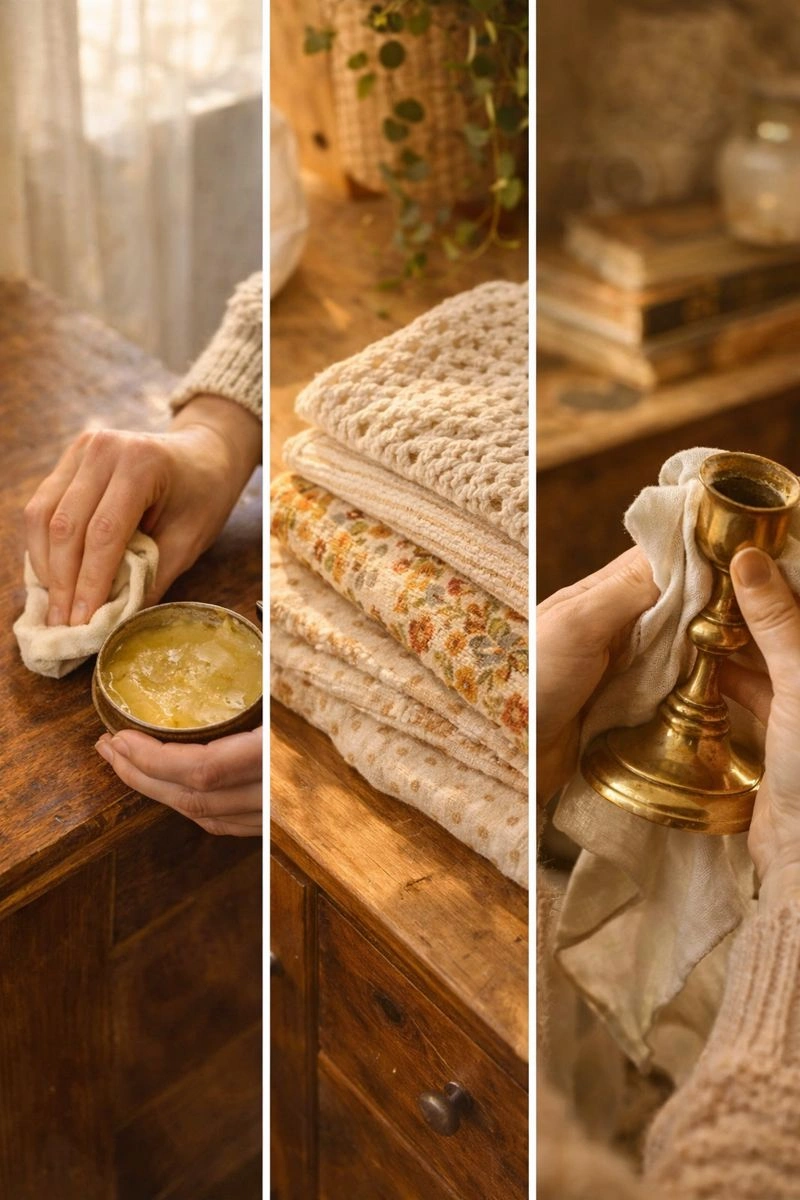
Once you’ve brought vintage home decor into your home, you become its steward. Proper maintenance ensures these pieces last another hundred years.
-
Wood: Avoid modern “spray” polishes that contain silicone, as they can build up and damage the finish. Instead, use a high-quality beeswax or lemon oil to hydrate the wood.
-
Textiles: Old rugs and pillows should be kept out of direct, harsh sunlight to prevent fading. If a vintage textile is fragile, consider framing it behind UV-protective glass rather than using it as a floor covering.
-
Metals: Decide if you like “patina.” For many, the tarnish on brass or copper is part of the charm. If you prefer a shine, use a gentle, era-appropriate cleaner to avoid stripping away the original plating.
Sustainability and the “Slow Home” Movement
In 2026, the concept of the “Slow Home” has gained massive traction. Much like the slow-food movement, this philosophy encourages homeowners to take their time. Instead of furnishing an entire house in one weekend, you wait for the right pieces to find you.

Incorporating vintage home decor is the core of this movement. It forces us to move away from the “disposable” culture. When you buy a vintage dining table, you aren’t just buying a surface to eat on; you are preserving a piece of history. This intentionality creates a home that feels grounded and meaningful.
From an environmental standpoint, the impact is undeniable. The carbon footprint of a vintage chair is practically zero compared to a new chair that must be manufactured, packaged in plastic, and shipped across an ocean.
Using Textiles and Lighting to Anchor the Look
If you are intimidated by large furniture, the easiest way to start with vintage home decor is through “softs” and “lights.”
The Power of the Rug

A vintage Turkish Oushak or a Persian Tabriz rug can act as the “soul” of a room. These rugs use natural vegetable dyes that age beautifully, creating a muted, sophisticated palette that modern synthetic rugs can’t replicate. Even a small vintage runner in a hallway adds instant character.
Lighting as Jewelry
Think of lighting as the jewelry of your home. A vintage Murano glass chandelier or a 1920s schoolhouse pendant light can transform a standard room into a designer space.

Because vintage wiring can be a fire hazard, it is always worth the small investment to have an electrician “re-wire” your vintage home decor lighting finds for modern safety standards.
DIY: When to Refurbish and When to Leave Alone
The DIY movement has made many people eager to “upcycle” vintage home decor. However, there is a fine line between “improving” and “devaluing.”
-
Paint with Caution: If you find a piece of solid mahogany or walnut furniture with a beautiful grain, do not paint it. Sanding and re-oiling it will preserve its value. Paint is best reserved for pieces with heavy surface damage or lower-quality woods like pine.
-
Upholstery: This is where you can truly modernize vintage home decor. Taking a classic 19th-century armchair and reupholstering it in a bold, modern fabric (like a vibrant velvet or a geometric print) is one of the best ways to blend eras.
-
Hardware: Sometimes, all a vintage piece needs is new life via its hardware. Swapping out pitted, broken handles for solid brass replicas can make an old dresser look like a high-end boutique find.
Future-Proof Design Perspective
For those looking at home design through the lens of longevity, vintage home decor is the ultimate “future-proof” strategy. Trends like “Cottagecore,” “Dark Academia,” and “Grandmillennial” all rely heavily on vintage elements.
By investing in quality antiques, you aren’t chasing a fleeting trend; you are building a collection that will remain relevant regardless of what the “top 10” lists say next year.
Furthermore, as AI and digital interfaces become more integrated into our homes (smart mirrors, hidden tech), the presence of vintage home decor provides a necessary “human” counterbalance. It reminds us of our history and provides a sense of touch and texture that a digital screen cannot offer.
The Bottom Line
Embracing vintage home decor is an act of rebellion against the “cookie-cutter” world. it is an invitation to slow down, to research, and to appreciate the hands that built the objects we surround ourselves with.
Whether it’s a small brass trinket found at a local market or a massive oak dining table passed down through generations, each piece of vintage home decor adds a layer of depth to your living space. Your home should be a reflection of your journey—a collection of things you love, rather than just things you bought.
Start small. Look for a piece that speaks to you. Don’t worry about it being “perfect”—in the world of vintage, the imperfections are where the beauty lives. By thoughtfully integrating vintage home decor into your environment, you aren’t just decorating a house; you are curating a legacy.