

Creating a home that feels both sophisticated and lived-in is an art form. Your living room is the heartbeat of the home, a sanctuary for relaxation, a hub for social gatherings, and a reflection of your personal journey.
Achieving that perfect balance of “modern cozy” requires more than just buying high-end furniture; it requires a strategic approach to living room styling.
In this comprehensive guide, we will explore how to curate a space that transcends temporary trends, focusing on timeless principles that prioritize comfort, functionality, and aesthetic harmony.
What is Living Room Styling?
At its core, styling is the process of arranging, accessorizing, and refining a space to give it a specific “feel” or personality. While many people use the term interchangeably with decorating, styling is often the final layer that breathes life into a room. It is the difference between a house that looks like a showroom and a home that feels curated and soulful.

Living Room Styling vs. Interior Design
It is helpful to distinguish between these two disciplines. Interior design typically involves the structural and architectural elements of a space, think floor plans, electrical layouts, plumbing, and permanent fixtures. Design is the “bones.”
Living room styling, on the other hand, is the “wardrobe.” It focuses on the movable elements: furniture placement, textiles, art, and decor. If interior design is about how a room works, styling is about how a room feels. You don’t need a massive renovation to transform your home; often, expert styling is enough to completely change the atmosphere.
Why Living Room Styling Matters in Everyday Living

The environment we inhabit significantly impacts our mental well-being. A cluttered, disorganized room can induce stress, while a well-styled space can act as a haven of tranquility.
Effective styling ensures that your room serves your lifestyle. It creates “zones” for conversation, provides adequate lighting for reading, and uses textures that invite you to kick off your shoes and stay a while.
Core Principles of Effective Living Room Styling
To master the art of the modern cozy look, you must follow a few foundational “rules” of design. These principles act as a compass, ensuring your creative choices remain grounded in visual logic.

Balance, Proportion, and Visual Harmony
Balance is about the distribution of “visual weight” in a room. If you have a massive, dark velvet sofa on one side of the room, the other side needs something of similar visual impact, perhaps a large bookshelf or a pair of substantial armchairs—to prevent the room from feeling lopsided.
Proportion refers to how items relate to each other in size. A common mistake in living room styling is choosing a rug that is too small or art that is swallowed by a large wall. Aim for pieces that feel “right” for the scale of the room.
Functionality Meets Aesthetics
A beautiful room that you can’t actually live in is a failure of styling. Every aesthetic choice should ideally have a functional backup.
For example, a stylish wooden bench can serve as extra seating during a party, and a beautiful ceramic bowl can hold remote controls or keys. Modern cozy design thrives when the “pretty” things also make your life easier.
Creating a Clear Focal Point
Every room needs a “star” of the show. This is the first place your eyes land when you walk in. In many homes, the focal point is a fireplace or a large window with a view.
In modern layouts, it might be a curated gallery wall or a stunning oversized pendant light. Once you identify your focal point, arrange your furniture and decor to complement rather than compete with it.
Living Room Styling Ideas for Different Interior Styles
Your personal style serves as the framework for your styling choices. Whether you lean toward the sleek or the soulful, here is how to apply styling across popular aesthetics.

Modern Living Room Styling
Modern style is characterized by clean lines, a focus on natural materials, and a “form follows function” philosophy. To achieve this, look for furniture with exposed legs and geometric silhouettes.
In living room styling, the modern look benefits from a mix of industrial materials (like metal or glass) softened by organic elements like wood or leather.
Minimalist Living Room Styling
Minimalism isn’t about having nothing; it’s about having the right things. The key here is intentionality. Every object should have a purpose or bring immense joy.
Use a restricted color palette and focus on the quality of materials, a single, high-quality linen sofa speaks louder than a room full of cheap accessories.
Scandinavian Living Room Styling
Scandinavian design (or “Hygge”) is the blueprint for cozy living. It emphasizes light, airy spaces with plenty of natural wood and soft textiles.
To style a Scandi room, layer different shades of white, cream, and grey, and bring in plenty of “warm” textures like sheepskin rugs and chunky knit throws.
Boho and Eclectic Living Room Styling
For those who love a “collected over time” look, Boho styling is perfect. This style embraces patterns, global influences, and a mix of eras.
The secret to making an eclectic room look styled rather than messy is a common thread—usually a repeating color or a consistent use of natural fibers like rattan and jute.
Traditional and Transitional Living Room Styling
Traditional styling relies on symmetry and classic details like crown molding and rolled-arm sofas. Transitional styling is the “sweet spot” between traditional and modern. It takes the comfort of the old world and strips away the fussiness, resulting in a look that is timeless and sophisticated.
Living Room Styling with Furniture
Furniture is the anchor of your room. How you choose and position these pieces dictates the flow of energy and movement.

Choosing the Right Sofa and Seating Arrangement
The sofa is usually the largest investment. For a modern cozy vibe, consider a sectional if space allows, as it naturally creates a “nesting” area. When styling, don’t feel obligated to push all seating against the walls. “Floating” furniture—pulling it toward the center of the room—creates a more intimate and professional look.
Styling Coffee Tables and Side Tables
A coffee table is a prime location for living room styling. Use the “Rule of Three”: group items in threes of varying heights. For example, a stack of large books, a medium-sized candle, and a small decorative bowl. A tray is a stylist’s best friend; it corrals smaller items and makes them look like a deliberate “moment” rather than clutter.
Layout Tips for Small and Large Living Rooms
In large rooms, use furniture to create sub-zones—a main conversation area and perhaps a small reading nook by the window. In small rooms, choose “leggy” furniture that allows you to see the floor underneath, which creates an illusion of more space.
Color Schemes for Living Room Styling
Color is the most powerful tool for setting a mood. It can make a room feel expansive and energetic or dark and moody.
Neutral Color Palettes That Never Fail
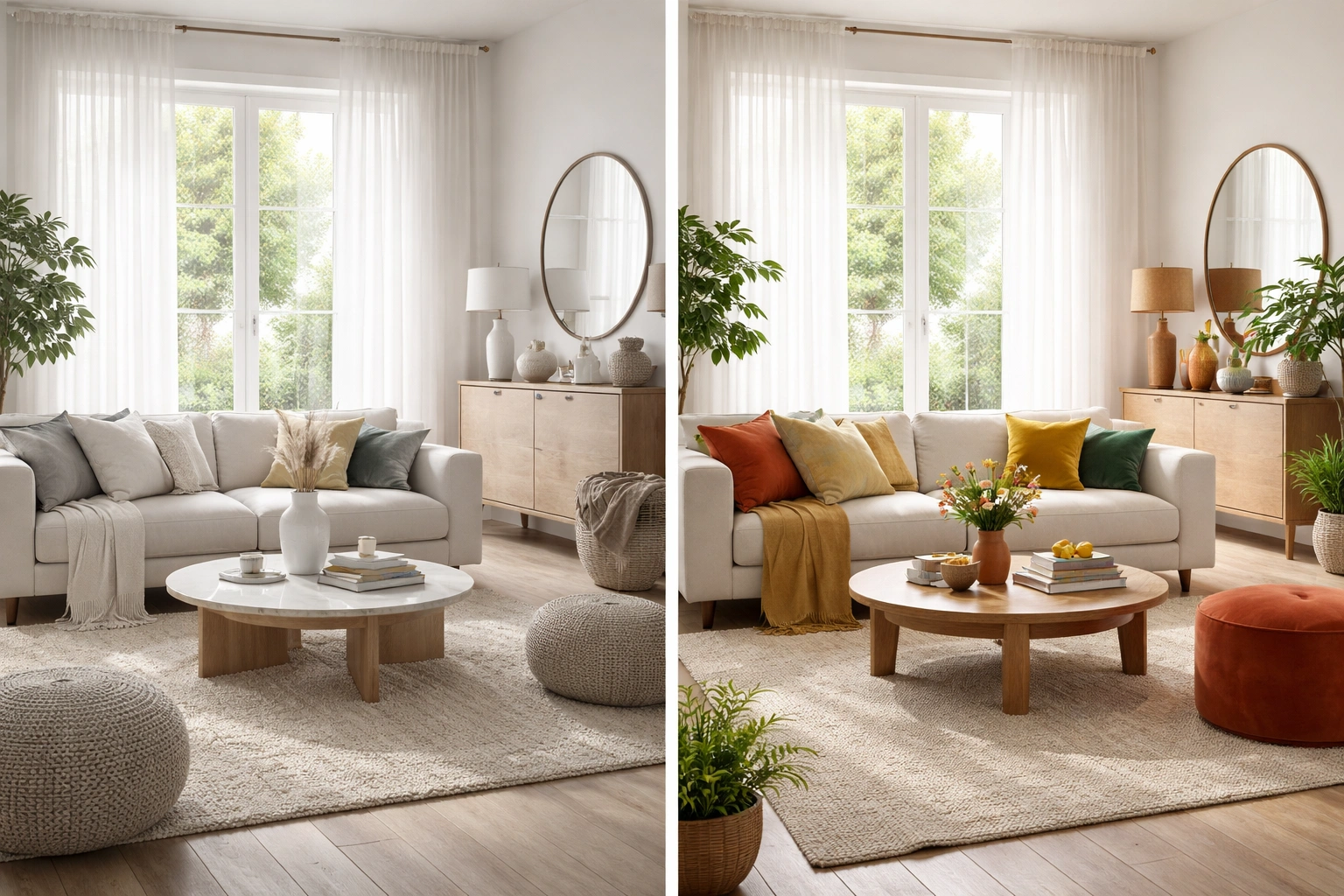
Neutrals are the backbone of modern cozy design. Greige, oatmeal, and soft taupe provide a calming backdrop. To prevent a neutral room from feeling flat, use different shades of the same color family to create depth.
Adding Accent Colors Without Overpowering the Space
If you love color, use the 60-30-10 rule: 60% of the room is your dominant color (walls/rug), 30% is your secondary color (upholstery), and 10% is your accent color (cushions/art). This ensures a balanced look in your living room styling.
Monochrome vs. Contrast-Based Styling
Monochrome (varying tones of one color) creates a very sophisticated, serene environment. Contrast-based styling (e.g., black accents in a white room) adds drama and architectural interest. Both work well for modern spaces, depending on the energy you want to evoke.
Living Room Styling with Lighting
Lighting is often an afterthought, but it is the secret ingredient to “cozy.”
Natural Light as a Styling Element
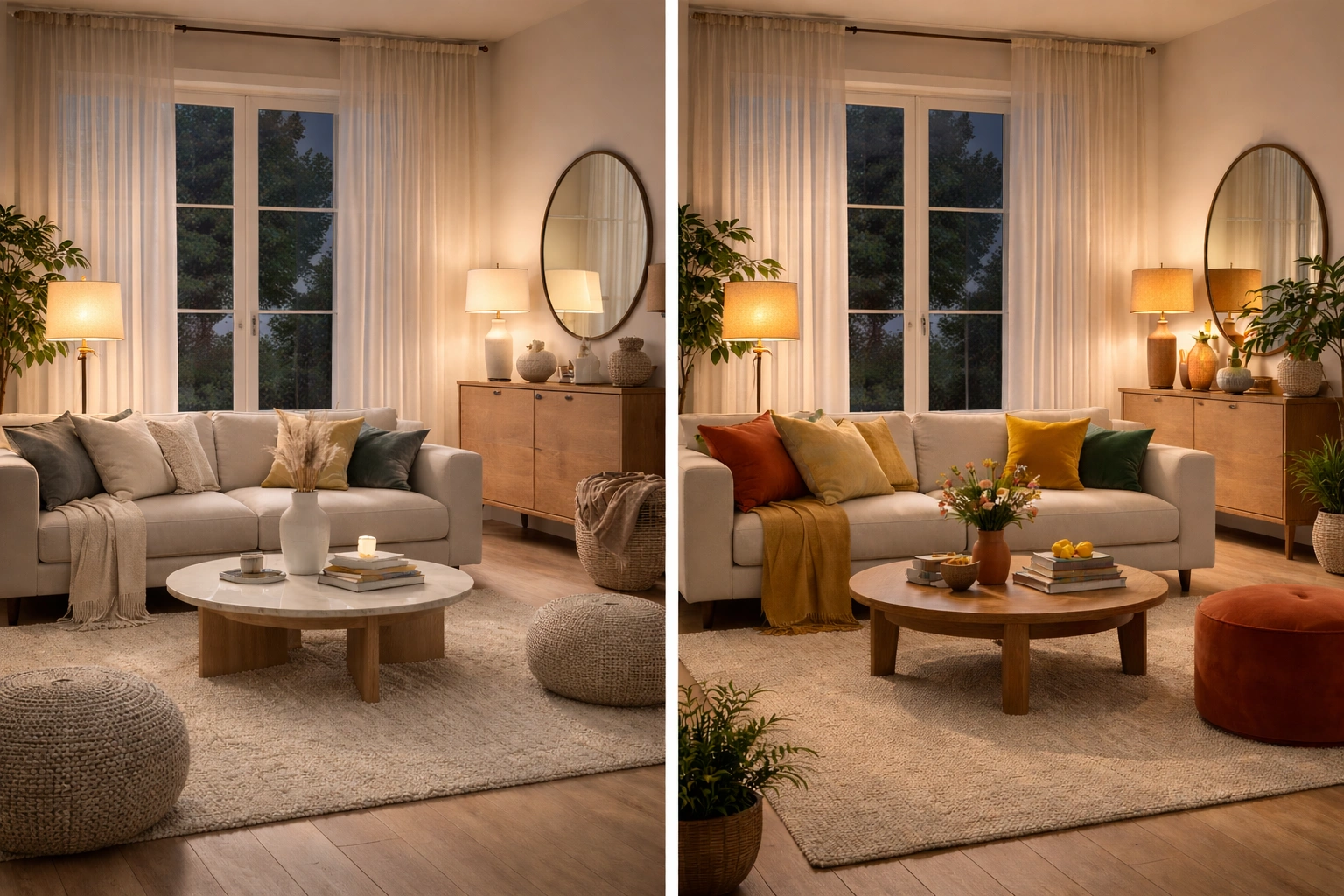
Maximize natural light by using sheer curtains that allow sun to filter through while maintaining privacy. Mirrors placed opposite windows can also help bounce light into darker corners.
Layered Lighting for Ambience and Function
Never rely solely on the “big light” (the ceiling fixture). Effective living room styling uses three layers:
-
Ambient: General overhead lighting.
-
Task: Reading lamps or desk lights.
-
Accent: Sconces or LED strips that highlight art or bookshelves.
Statement Lighting Fixtures That Elevate Style
An oversized pendant or a sculptural floor lamp can act as a piece of art. In a modern living room, a matte black or brass fixture can instantly elevate the room’s style quotient.
Wall Styling Ideas for Living Rooms
Your walls are a blank canvas for expressing your personality.
Wall Art and Gallery Wall Styling
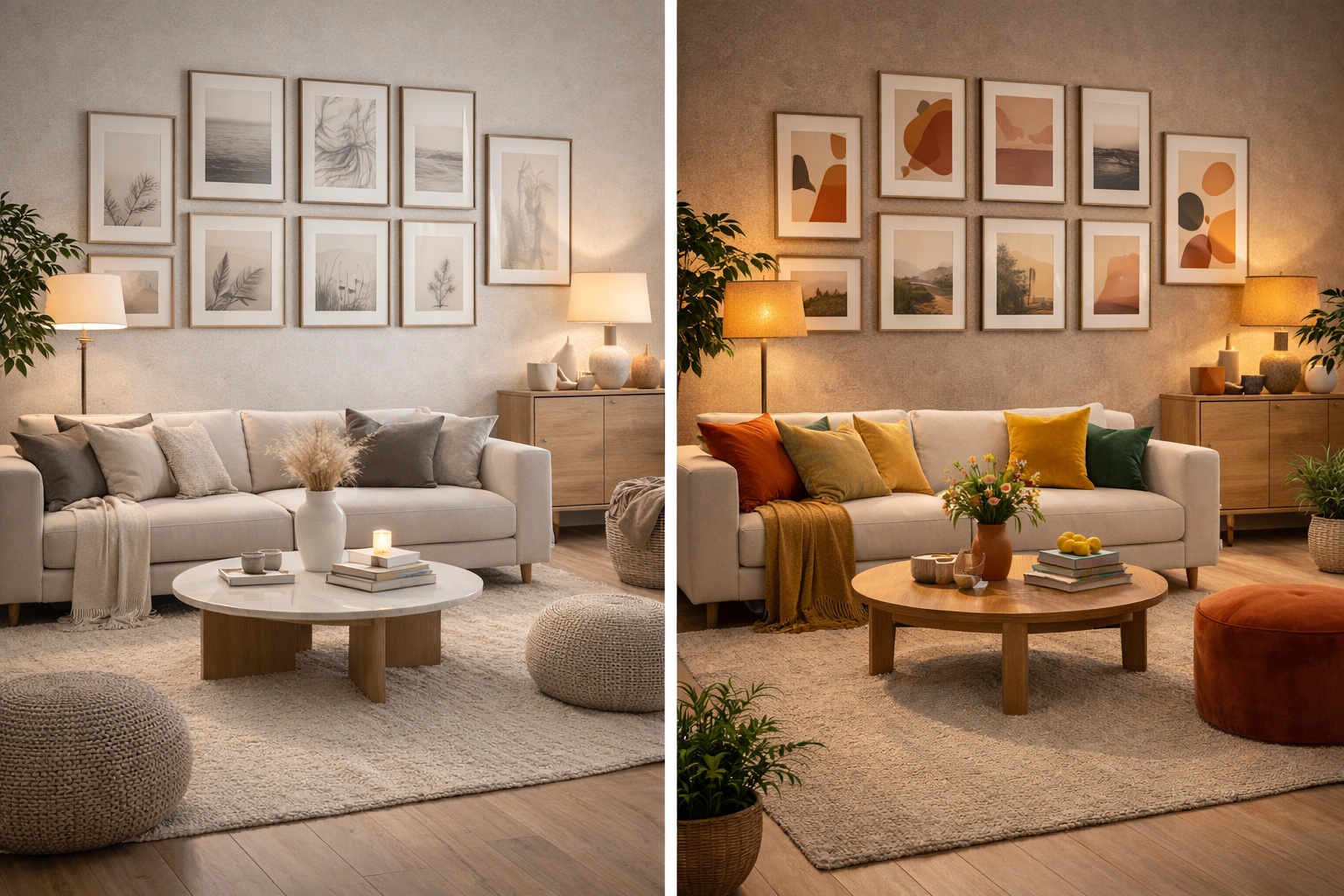
When hanging art, the golden rule is “eye level”—usually about 57 to 60 inches from the floor to the center of the piece. For a gallery wall, lay your frames out on the floor first to find the perfect arrangement before putting holes in the wall.
Accent Walls and Feature Panels
Accent walls aren’t just for paint. Consider wood slat panels, textured wallpaper, or even a lime-wash finish. These add tactile interest that paint alone cannot achieve.
Shelving and Wall Decor Placement Tips
Style bookshelves with a mix of books (both vertical and horizontal) and “negative space.” Don’t pack every inch; let the objects breathe. Mix in personal items like photos or travel souvenirs to keep it authentic.
Living Room Styling with Textiles & Textures
This is where the “cozy” happens. Texture adds a sensory dimension to your design.
Styling Rugs for Comfort and Scale
A rug acts as the “anchor” for your furniture. Ensure that at least the front legs of all seating furniture sit on the rug. This visually connects the pieces and defines the “living” zone.
Cushions, Throws, and Soft Furnishings
Don’t be afraid to mix fabrics. Pair a smooth leather sofa with a chunky wool throw and linen cushions. This contrast makes the space feel rich and inviting. In living room styling, the way you drape a throw—either neatly folded for a modern look or casually tossed for a boho vibe—changes the whole mood.
Mixing Textures for Depth and Warmth
Think beyond fabric. Texture can come from a stone coffee table, a jute rug, or a velvet armchair. The goal is to have a variety of surfaces that catch the light differently.
Living Room Styling with Accessories & Decor
Accessories are the “jewelry” of the room. They provide the finishing touches that tell your story.
Styling Decor Objects with Intention
Avoid “filler” decor. Choose pieces that mean something to you. A vintage vase found at a flea market will always have more styling power than a mass-produced plastic figurine.
Indoor Plants and Greenery
Plants bring life, literally. A tall fiddle-leaf fig can fill an empty corner, while trailing pothos can soften the edges of a bookshelf. Greenery also helps clean the air, contributing to the “wellness” aspect of your home.
Minimal vs. Layered Accessory Styling
Minimal styling focuses on a few high-impact pieces. Layered styling (common in “maximalism”) is about creating “vignettes” or small clusters of objects. Both require a keen eye for balance to avoid looking cluttered.
Living Room Styling for Small Spaces
Small rooms require clever tricks to feel spacious without sacrificing style.
Space-Saving Styling Tricks
Use “ghost” furniture (acrylic or glass) that takes up zero visual space. Choose multi-functional pieces, like an ottoman that doubles as a coffee table and extra seating.
Furniture and Decor Scale for Small Living Rooms
Paradoxically, sometimes one large piece of furniture (like a properly sized sectional) looks better in a small room than many small, “leggy” pieces, which can make a room feel bitsy and cluttered.
Visual Illusions That Make Rooms Look Bigger
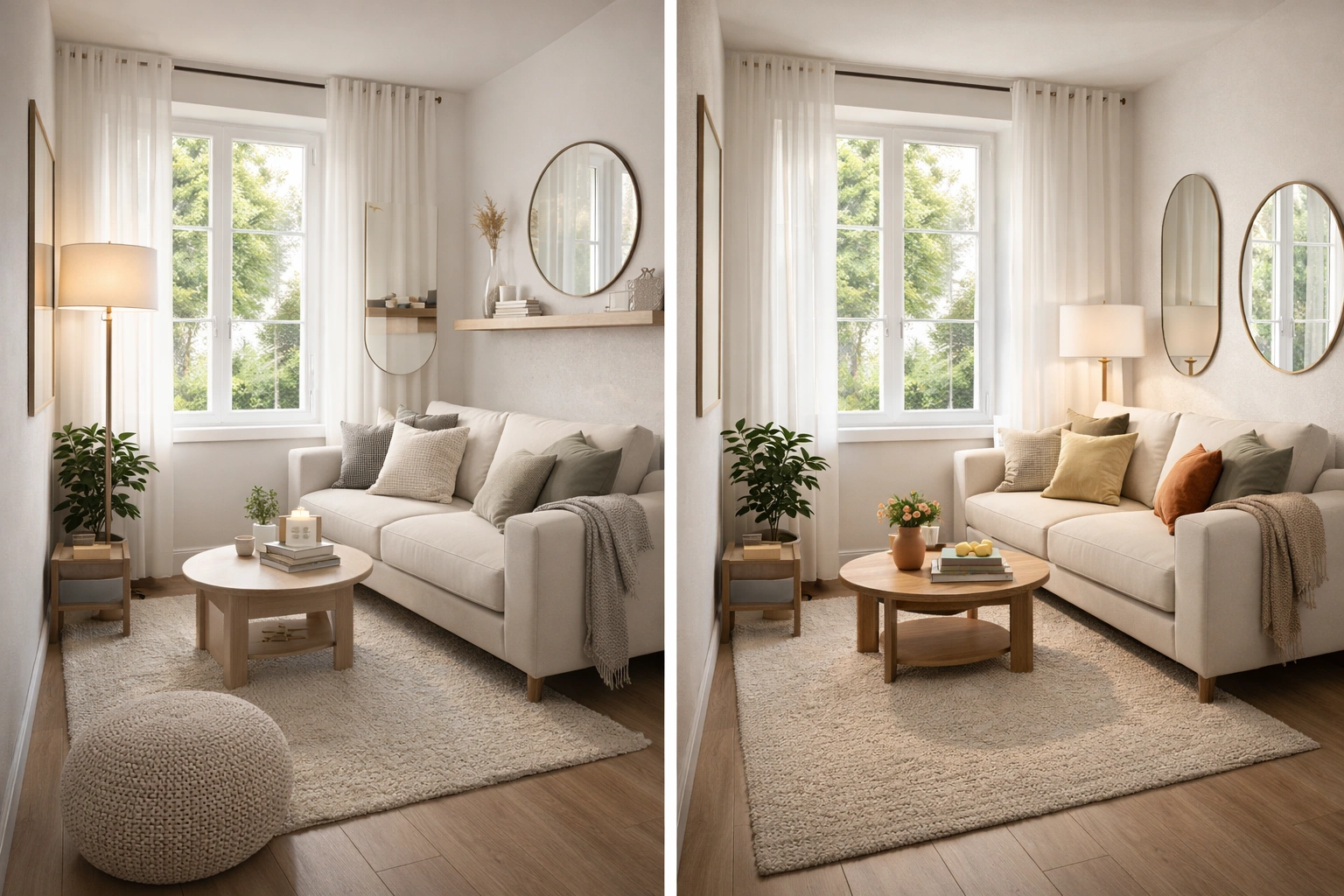
Hang your curtain rods higher and wider than the actual window frame. This draws the eye upward and outward, making the windows—and the room—feel much larger. This is a classic move in professional living room styling.
Living Room Styling for Open-Plan Homes
Open-plan living is popular, but it can feel cold and cavernous if not styled correctly.
Zoning Without Walls
Use rugs and furniture placement to define the boundaries of the living area. A sofa with its back to the dining table acts as a soft “wall” that separates the two functions.

Styling Transitions Between Spaces
Ensure there is a “flow” between the kitchen, dining, and living areas. You can do this by repeating a specific material (like light oak) or a color throughout the entire open space.
Creating Cohesion Across Open Areas
While each zone should have its own identity, they should all belong to the same “family.” Use a consistent flooring type and a unified color palette to keep the open-plan home feeling harmonious.
Budget-Friendly Living Room Styling Ideas
You don’t need a fortune to create a high-end look. Styling is about creativity, not just consumption.
Styling Using What You Already Own
Sometimes, simply “shopping your own home”—moving a chair from the bedroom to the living room or re-styling a bookshelf—is enough to refresh the space.
Affordable Decor and DIY Styling Tips
Paint is the most cost-effective way to change a room. Consider painting your fireplace mantle a bold color or using “peel and stick” molding to add architectural interest to plain walls.
Where to Invest vs. Where to Save
Invest in the “touch points”: the sofa you sit on and the rug you walk on. Save on “trends” like trendy vases, small side tables, or seasonal cushions which can be found at lower price points.
Seasonal Living Room Styling Ideas
Your home should evolve with the seasons to keep it feeling fresh.
Summer Living Room Styling
In summer, strip back the layers. Swap heavy velvet pillows for linen or cotton. Bring in fresh flowers and use lighter scents like citrus or sea salt.
Autumn and Winter Styling for Cozy Spaces
When the temperature drops, lean into the “cozy.” Bring back the heavy knits, light the candles, and use warmer-toned lighting. This is the peak time for living room styling focused on comfort.
Quick Seasonal Refresh Tips
A simple change of a candle scent, a new coffee table book, or a different set of cushion covers can make the room feel entirely new without a major overhaul.
Common Living Room Styling Mistakes to Avoid
Even with the best intentions, it’s easy to fall into styling traps.
Overcrowding the Space
Just because you have space doesn’t mean you need to fill it. “Negative space” (empty space) is essential for the eye to rest. If you can’t walk comfortably through the room, you have too much furniture.
Ignoring Lighting and Scale
The “rug that is too small” is the most common mistake in living room styling. If in doubt, go bigger. Similarly, avoid relying on one single light source; it creates harsh shadows and a “flat” atmosphere.
Lack of Personal Touch
A room that looks exactly like a catalog page lacks soul. Don’t be afraid to show your hobbies, your family photos, or your quirky collections. Perfection is boring; personality is what makes a home.
Living Room Styling Trends in 2025
As we move through 2025, several key trends are dominating the world of interior aesthetics.
Warm Minimalism and Soft Neutrals
We are moving away from the “all-white” sterile look toward “Warm Minimalism.” This involves using earthy tones like terracotta, sage, and sand to create a space that feels clean but deeply inviting.
Sustainable and Natural Materials
Eco-conscious living room styling is no longer a niche; it’s a standard. Expect to see more cork, bamboo, recycled glass, and organic textiles. People want to know that their beautiful home isn’t harming the planet.
Smart and Flexible Living Spaces
With the rise of hybrid work, the living room often doubles as an office. Styling now includes “clutter-free” tech solutions, like hidden charging stations and furniture that can be easily moved to accommodate a Zoom call or a yoga session.
Frequently Asked Questions About Living Room Styling
How Do I Style My Living Room Like a Designer?
The key is “layering.” Start with your large furniture, add a rug to anchor the space, layer in lighting, and finish with textiles and accessories. Designers also pay close attention to “sightlines”—ensuring that every angle of the room offers something beautiful to look at.
What Is the First Thing to Do When Styling a Living Room?
Clear the clutter. You cannot style a messy room. Once the space is clear, identify your focal point and arrange your largest piece of furniture (the sofa) to face it. This sets the foundation for all other living room styling decisions.
How Can I Make My Living Room Look Expensive on a Budget?
Focus on “perceived value.” Large-scale art (even a DIY canvas), a very large rug, and a curated, minimalist coffee table look much more expensive than a room filled with many small, cheap trinkets. Also, ensure your curtains are hung high and reach the floor.
Final Thoughts on Living Room Styling
At the end of the day, living room styling is about more than just aesthetics; it’s about creating an environment that supports your best life.
By balancing modern principles with cozy textures and functional layouts, you can transform any space into a sanctuary. Remember that your home is a living, breathing entity—it’s okay for it to evolve as you do.
Trust your instincts, embrace the process, and focus on creating a space that feels like you.